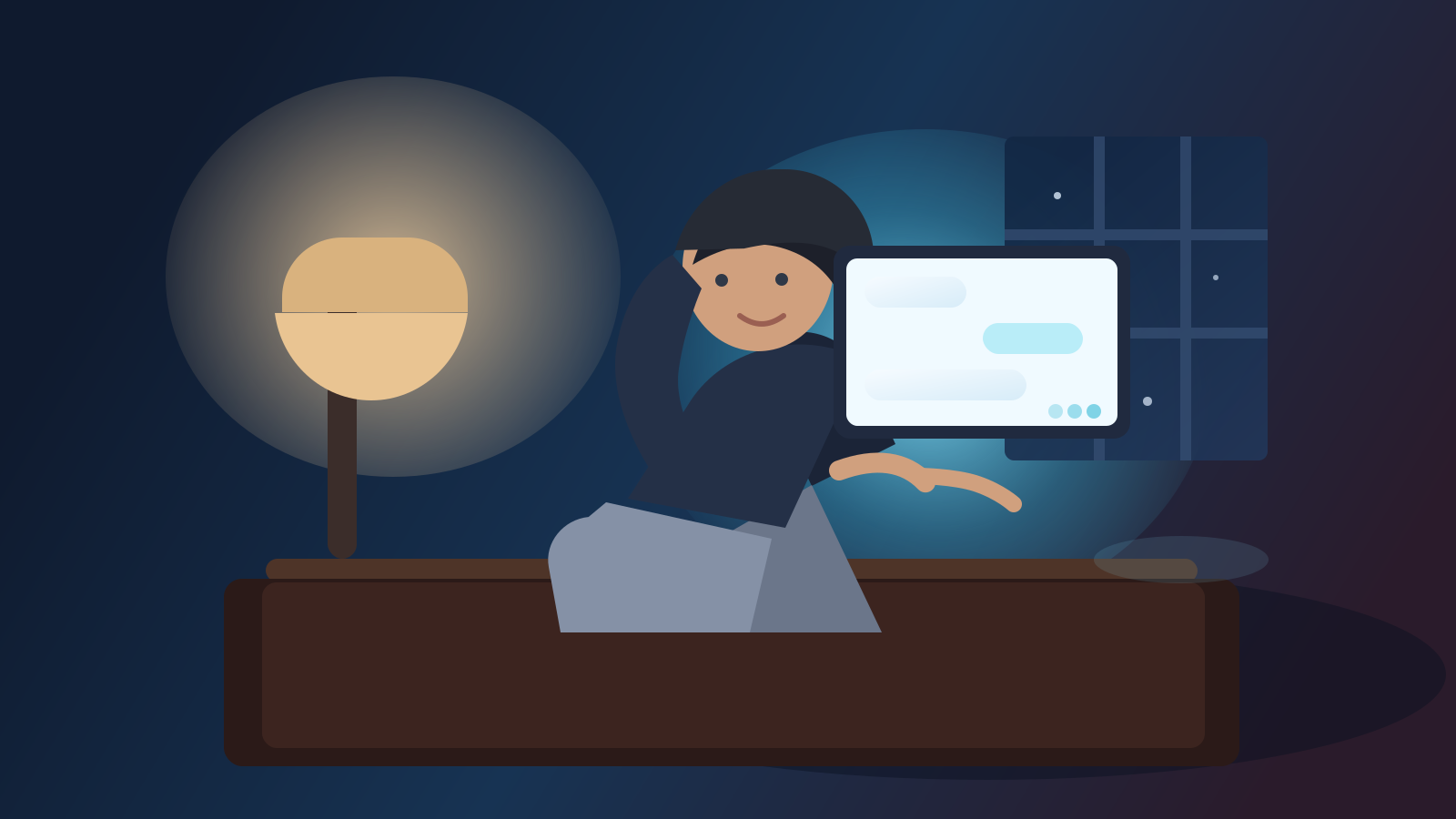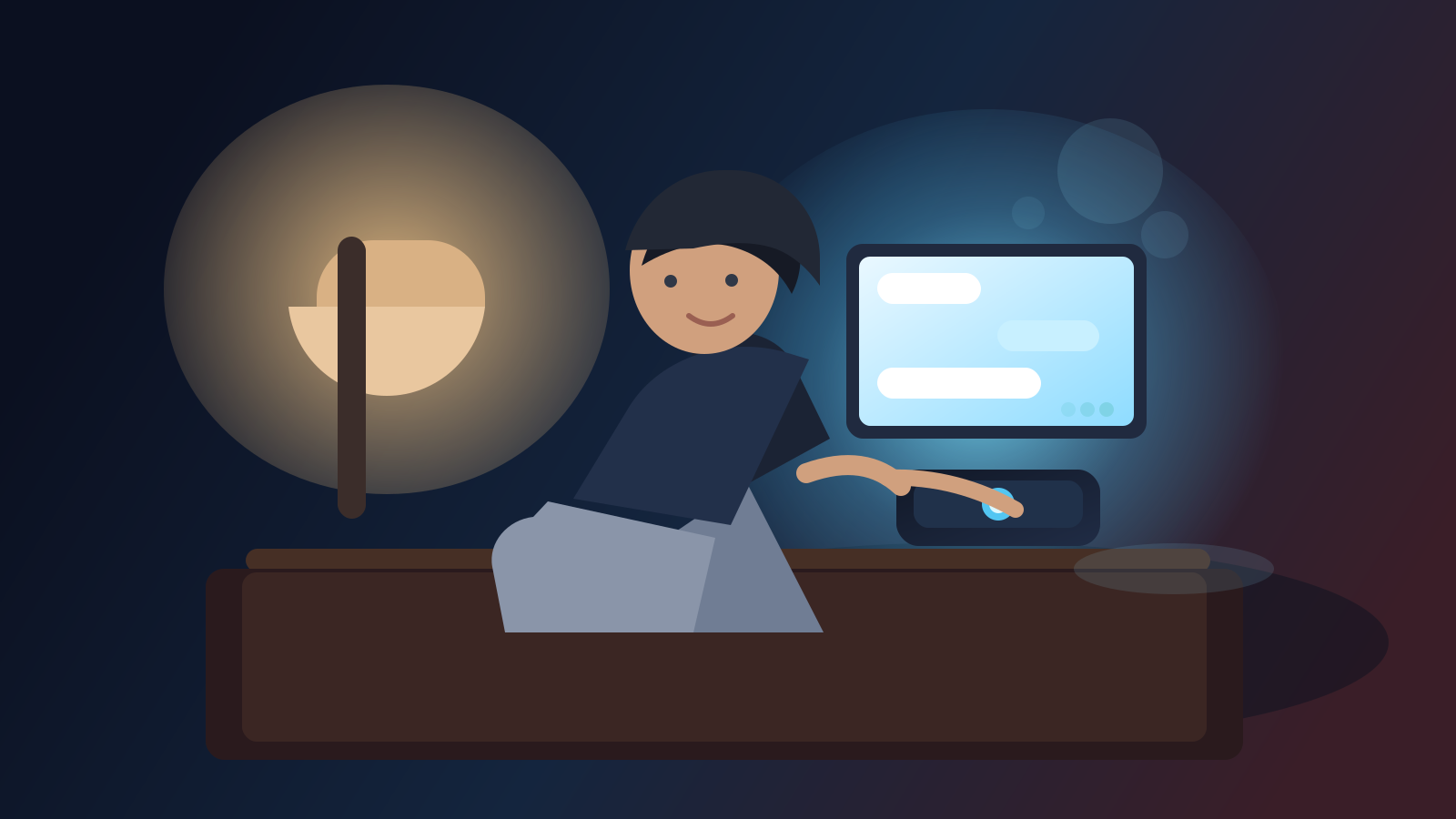
You open Instagram "just for a second." Forty-five minutes later, you're watching a video of a raccoon eating a grape, followed by a seventeen-second clip of someone reorganising their fridge, followed by a reel of a stranger crying about their situationship. You don't know how you got here. You put your phone down, pick up your book, and realise you've read the same paragraph four times without absorbing a single word.
That feeling? That's brain rot.
Oxford University Press named "brain rot" the Word of the Year for 2024, defining it as the supposed deterioration of a person's mental or intellectual state as a result of overconsumption of online content. It wasn't chosen just because it's a funny phrase people throw around on TikTok. It was chosen because it captured something millions of people recognise in themselves: a creeping sense that their attention, curiosity, and inner quiet are being slowly hollowed out.
This isn't a post to scare you. It's a post to help you understand what's actually happening in your brain, why it feels so hard to stop, and what you can genuinely do about it. Starting today.
What Actually Happens to Your Brain
Your brain is not lazy. It is, in fact, extraordinarily efficient, and that efficiency is exactly what gets exploited.
Every time you swipe to a new piece of content, your brain releases a small hit of dopamine. Dopamine is the chemical of anticipation; it surges not when you get a reward, but in the moment just before, when you don't yet know what's coming. The endless scroll is engineered to keep you permanently in that moment of "maybe the next thing will be amazing." It almost never is. But your brain doesn't give up.
Over time, this constant low-level stimulation recalibrates your brain's baseline. Activities that don't deliver instant gratification, reading, conversation, sitting quietly, creative work, start to feel unbearably slow. Uncomfortable. Boring. Your threshold for what counts as interesting shifts upward. You need more to feel the same.
This is exactly how tolerance works in substance use, and researchers are increasingly using the same language to describe digital overconsumption, not because scrolling is the same as addiction, but because the neurological mechanics rhyme uncomfortably well.
A 2023 study published in PLOS One found that heavy social media use was associated with reduced activity in the prefrontal cortex, the part of your brain responsible for decision-making, focus, and emotional regulation. That's not a moral failing. It's a physiological response to an environment your brain was never built for.
The Symptoms Nobody Talks About
Brain rot doesn't announce itself. It seeps in gradually, disguised as ordinary modern life. You might be experiencing it if:
- You feel mentally full but empty at the same time. You've consumed hours of content and yet feel vaguely restless, like you haven't actually done anything. Because you haven't. Consumption without creation or reflection doesn't nourish the mind, it just occupies it.
- You find long-form anything painful. A 2,000-word article feels like a commitment. A forty-minute documentary feels like homework. A conversation that requires sustained attention makes you quietly fidgety.
- You reach for your phone in every quiet moment. Waiting for the kettle. Sitting in a car. The ten seconds between sending a message and getting a reply. Silence has become something to fill rather than something to inhabit.
- You struggle to be present. Dinner with a friend, a walk outside, a quiet evening at home, part of you is always elsewhere, half-thinking about what you might be missing online, or mentally composing captions for moments you haven't even finished living yet.
- Your inner monologue has gone quiet. Many people report that they used to have a rich inner life, daydreams, ideas that surfaced while walking, a natural inclination to reflect. That voice gets crowded out when there's always external noise filling the space.
The Real Cost
Here is where it gets serious.
Chronic digital overconsumption is linked to rising rates of anxiety, depression, and loneliness, particularly in young adults and teenagers. A 2022 meta-analysis covering over 35,000 participants found a consistent association between heavy social media use and poor mental health outcomes. This isn't because social media is evil. It's because it displaces things that genuinely nourish mental wellbeing: deep sleep, face-to-face connection, physical movement, and unstructured time.
There's also the comparison trap. The content algorithm serves you a curated version of other people's lives, their best moments, their most photogenic selves, their most shareable achievements. Your brain compares that highlight reel to the unfiltered reality of your own life and draws an unfair conclusion. You feel behind. You feel like less. You scroll for more, and the cycle deepens.
And then there's time, the most non-renewable resource you have. Research by data analytics firms has consistently found that the average person spends between four and seven hours per day on screens beyond work. At five hours a day, that's 1,825 hours a year, the equivalent of 76 full days. What could you do with 76 days?
This Is Not About Willpower
Before we get to solutions, let's put something to rest: this is not a willpower problem.
The apps you're using were designed by rooms full of the world's most talented engineers and psychologists, with one goal, to keep you engaged for as long as possible. Billions of dollars and decades of research have gone into understanding exactly how to trigger your dopamine system, exploit your social instincts, and keep you coming back. You are not failing to resist a temptation. You are one human being up against a machine built specifically to override your resistance.
Knowing this doesn't excuse passivity. But it should dissolve the shame. You're not weak for struggling. You're human in an environment that wasn't designed with your humanity in mind.
What Actually Helps: Practical, Honest Solutions
- Create friction, not rules. Blanket bans rarely work. Instead, make the behaviour you want to reduce slightly harder. Delete social media apps from your phone's home screen, log out after every use, move your phone charger out of the bedroom, or leave your phone in a different room when you eat.
- Replace, don't just remove. Your brain will protest an empty space. Keep a book on your kitchen counter, download a podcast you actually want to hear, put a journal by your bed, or have a go-to playlist for when you'd otherwise reach for your phone.
- Protect your morning and your night. The first and last thirty minutes of your day are disproportionately influential. Try a two-week experiment: no phone for the first thirty minutes after waking, and no phone for thirty minutes before sleeping.
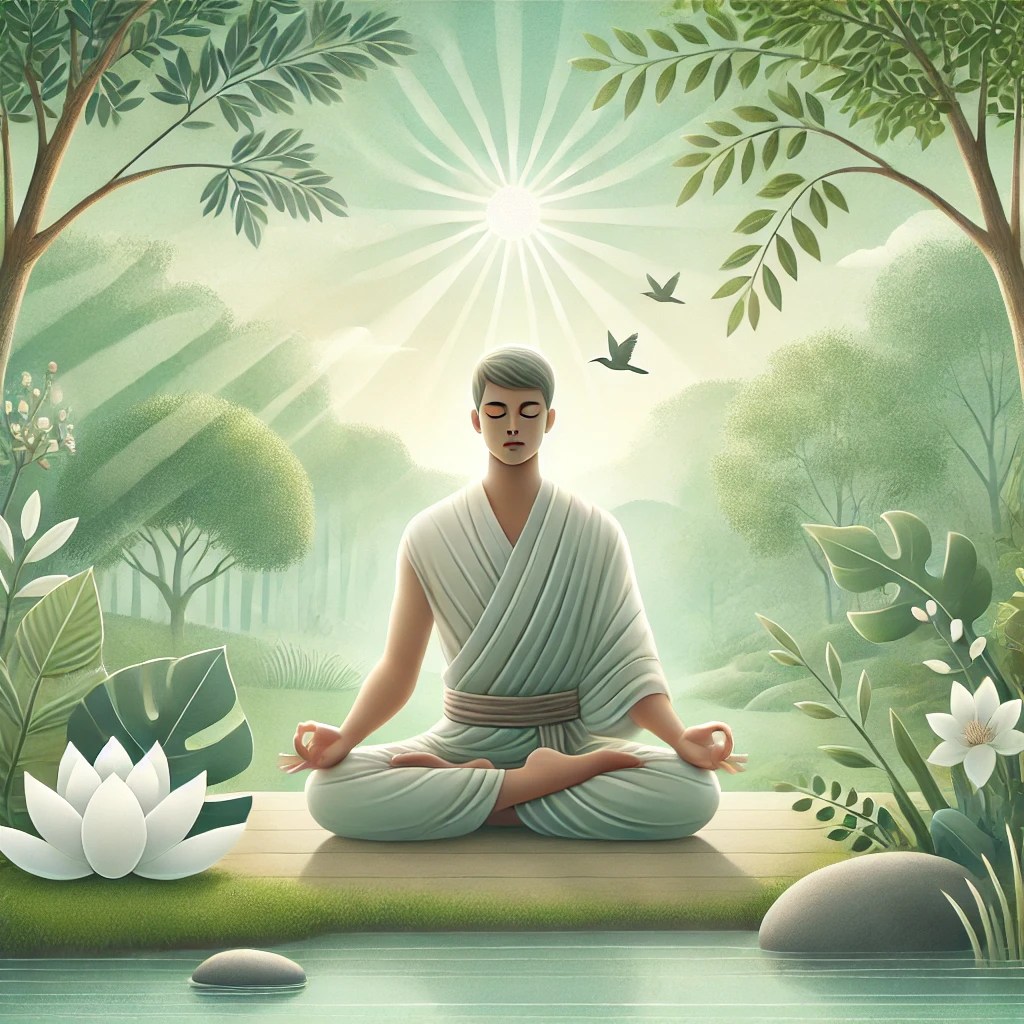
- Practise doing nothing. Boredom is not the enemy. Sit with your morning coffee without your phone. Let your mind wander on a walk without earphones. Notice what surfaces when the noise stops.
- Audit, not abstinence. Use your phone's screen time tools honestly. Once a week, look at your usage data with curiosity rather than judgment. Notice the patterns, what time of day, what emotional state, what triggers the opening of certain apps.
- Seek real depth. The antidote to brain rot is not less, it's different. Seek experiences that require your full attention and return something meaningful: a real conversation, a creative project, a book that stays with you, or time in nature without a destination.
A Final, Human Thought
There's a particular grief in realising that you've been somewhere without really being there, that you sat through a beautiful evening half-present, that you missed a conversation because you were thinking about your feed, that you've been living slightly at a distance from your own life.
That grief is not a verdict on who you are. It's information. It's your deeper self telling you that it wants more from you, and for you.
Brain rot is not a life sentence. It's a pattern, and patterns can change. Not through white-knuckled discipline or total digital exile, but through small, consistent choices to come back to yourself.
Your attention is the most intimate thing you have. It's worth protecting.
Found this helpful? Share it with someone who might need to read it. And tell us in the comments, what's one small thing you're doing to reclaim your attention?